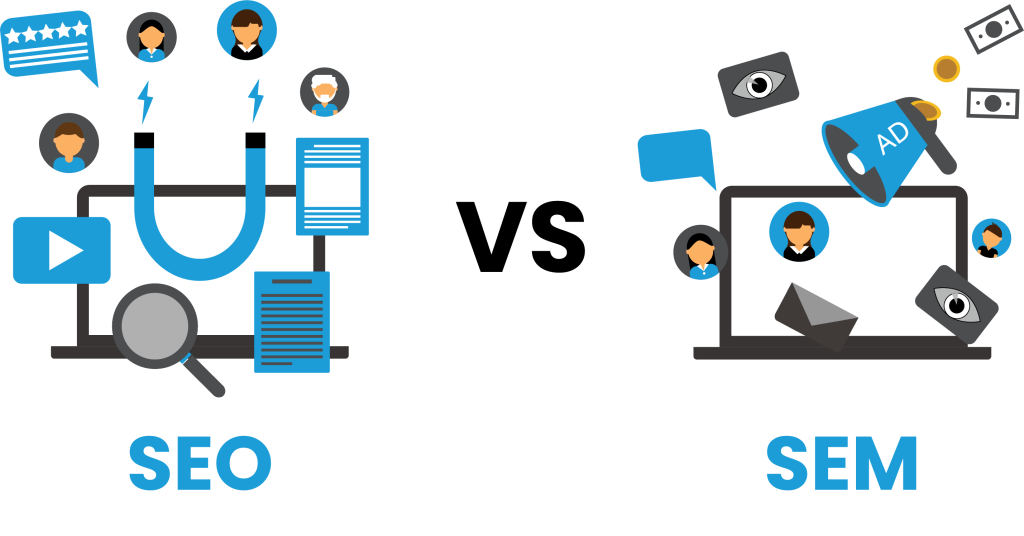
Two strategies often dominate discussions about success in this ever-evolving world of digital marketing: Search Engine Optimization (SEO) and Search Engine Marketing (SEM). Even though they may seem to be similar at first glance, these two approaches serve different purposes and provide unique advantages.
Well, an understanding of the difference between SEO and SEM is essential if you’re looking to drive traffic, generate leads, and grow your presence online effectively.
What is SEO?
SEO (search engine optimization) is the process of improving one’s website to increase its visibility in organic (non-paid) search results. SEO mostly involves optimizing various on-page elements, building quality backlinks, improving site speed, and ensuring a mobile-friendly experience. The ultimate goal of SEO is to rank higher in search engine results pages (SERPs) for targeted keywords over time.
Key Components of SEO:
- On-page SEO: Content optimization, internal linking, meta tags, keyword usage, and user experience.
- Off-page SEO: Building authoritative backlinks, brand mentions, and social signals.
- Technical SEO: Enhancing site structure, improving crawlability, fixing errors, and optimizing performance.
Pros of SEO:
- Long-term and sustainable results
- High ROI over time
- Builds trust and credibility
- Ideal for attracting organic traffic
Cons of SEO:
- Results take time (typically 3–6 months)
- Requires ongoing effort and updates
- Competitive in popular niches
What is SEM?
Search Engine Marketing (SEM) is a broader strategy that includes SEO but primarily focuses on paid search advertising. The most common form of SEM is pay-per-click (PPC) ads—where advertisers bid on keywords and pay for each click their ad receives. With SEM, you can appear at the top of the SERPs almost instantly, provided your ad quality and bid are competitive.
Key Components of SEM:
- Keyword Research and Bidding
- Ad Creation (Text, Display, Shopping Ads)
- Landing Page Optimization
- Performance Tracking and Adjustment
Pros of SEM:
- Immediate visibility and traffic
- Highly targeted with measurable results
- Great for promotions, events, or new launches
- Easy to scale with budget
Cons of SEM:
- Can be costly in competitive industries
- Traffic stops when the budget runs out
- Requires constant monitoring and optimization
SEO vs SEM: Key Differences at a Glance
Following are the differences between SEO and SEM so that you can get a clear zest on SEO vs SEM.
| Factor | SEO | SEM |
|---|---|---|
| Traffic Type | Organic | Paid |
| Cost | Free (excluding tools/services) | Pay per click or impression |
| Speed of Results | Slower (long-term investment) | Fast (instant traffic) |
| Longevity | Long-lasting with continuous effort | Temporary (depends on ad budget) |
| Placement in SERPs | Below paid ads | Top of the page (ads section) |
| CTR (Click-Through Rate) | Generally higher over time | Varies, often lower than organic CTR |
| Trust Factor | Higher (seen as more credible) | Lower (users know it’s a paid ad) |
When Should You Use SEO?
SEO is the best choice if you’re aiming for sustainable, long-term traffic and want to build a trustworthy brand presence. It’s particularly effective for businesses with content-rich websites, blogs, or those targeting niche audiences.
Ideal for:
- Small to medi businesses with limited ad budgets
- Educational or informational websites
- Long-term brand building
When Should You Use SEM?
SEM is ideal when you need quick results, are launching a product, or want to run targeted campaigns. If you’re in a competitive industry or need to dominate the top of search results immediately, SEM can offer the boost you need.
Ideal for:
- Product launches and time-sensitive promotions
- E-commerce businesses with conversion goals
- Companies targeting specific buyer intent keywords
SEO + SEM: A Powerful Combination
Rather than choosing one over the other, many successful brands integrate both SEO and SEM to maximize results. SEO builds a strong foundation, while SEM drives immediate traffic and insights. For example, PPC campaigns can help test keywords that can later be targeted organically with SEO strategies.
Using both approaches:
- Offers broader keyword coverage
- Increases overall visibility
- Provides more data to refine strategy
Conclusion
Both of the factors SEO and SEM play a crucial role in creating a strong and everlasting digital marketing strategy. While SEO delivers lasting value to the website, SEM offers immediate exposure. Choosing what suits you the best for your website and brand depends on your specific goals, budget, timeline, and available resources. Wanting to dominate search engines, combine both SEO and SEM to increase visibility and achieve better ROI in the long run.
Wanting to grow your online presence? Join us at Krizmatic and start SEO for long-term wins and add SEM for faster, targeted impact. Together we can create a marketing powerhouse for you that fuels consistent growth into your website.